
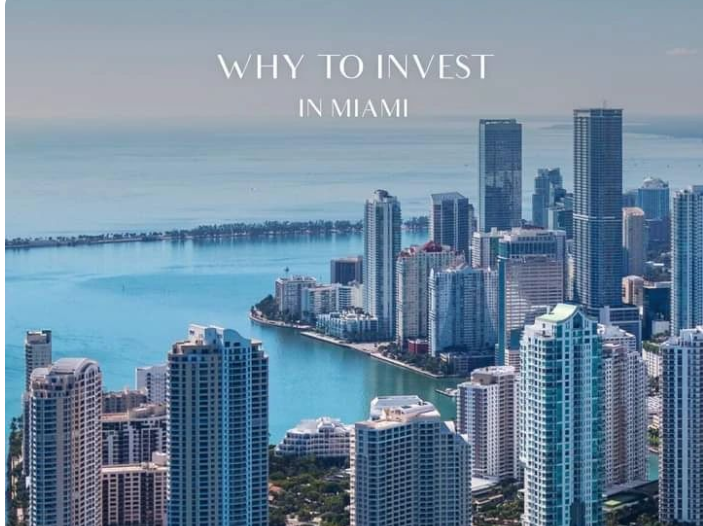
For years, Miami was seen as a secondary destination — a market driven mainly by vacation homes, foreign investors, and retirees.
Today, the reality is completely different.
Miami has become one of the most closely watched real estate markets in the United States. Between the massive migration of residents from New York and California, the arrival of technology and financial companies, and sustained population growth, the city continues to attract investors from around the world.
But in 2026, one question keeps coming up:
is it still an opportunity… or is the risk becoming too significant?
A Market That Continues to Defy Expectations
Despite rising interest rates in recent years and slowdowns seen in several major U.S. cities, Miami remains an especially resilient market.
According to recent data:
- Florida continues to be one of the fastest-growing states in the United States.
- Miami still attracts high-income residents thanks to its tax advantages (no state income tax).
- The finance, technology, and luxury sectors continue expanding across South Florida.
Companies and investors who previously would have chosen Manhattan, San Francisco, or Los Angeles are now viewing Miami as a strategic alternative.
As a result, real estate demand remains strong, especially in premium areas and developing neighborhoods.
Why Investors Are Still Looking at Miami in 2026
1. Strong Rental Demand
Population growth continues to put pressure on the rental market.
Many newcomers prefer renting before buying, helping keep rental prices high in areas such as:
- Brickell
- Downtown Miami
- Edgewater
- Wynwood
- Doral
- Miami Beach
For investors, this still represents attractive rental income opportunities, especially for modern, well-located properties.
2. The Luxury Market Remains Extremely Active
Miami has become a global destination for high-net-worth buyers.
Luxury properties continue attracting:
- entrepreneurs,
- international investors,
- athletes,
- celebrities,
- and buyers seeking a more tax-friendly lifestyle.
Even in a more cautious economic environment, Miami’s luxury segment often remains more stable compared to other major U.S. markets.
3. Development Projects Are Transforming the City
Miami continues to evolve rapidly.
New residential, commercial, and hospitality developments are reshaping several strategic neighborhoods. Investors entering early in transforming areas may still benefit from strong medium-term appreciation potential.
Areas receiving particular attention in 2026 include:
- Miami Worldcenter
- Wynwood
- Edgewater
- Allapattah
- North Miami
- Fort Lauderdale (increasingly connected to Miami’s expansion)
But What Are the Risks?
No market is without risk, and Miami is no exception.
Prices Have Risen Significantly
Since 2020, many sectors have experienced rapid property value growth. Some investors now wonder whether certain segments are becoming overvalued.
Even though demand remains strong, buyers must be far more strategic than they were a few years ago.
Ownership Costs Are Increasing
One often underestimated factor in Miami is the rising cost of ownership:
- insurance,
- property taxes,
- condo fees,
- and maintenance expenses.
In 2026, insurance costs in Florida continue rising across many coastal areas, which can significantly impact the true profitability of an investment.
Choosing the Right Area Has Become Essential
Not all neighborhoods perform equally.
Some areas continue experiencing strong growth, while others are beginning to slow after the sharp increases of recent years.
Today, investing in Miami requires deeper analysis:
- location,
- property type,
- rental potential,
- project quality,
- and exit strategy all matter more than ever.
So… Opportunity or Risk?
The answer depends largely on the investor’s strategy.
For those looking for:
- a dynamic market,
- strong international demand,
- attractive rental potential,
- and long-term growth,
Miami remains one of the most attractive real estate markets in North America.
But the 2026 market is no longer the market of 2021.
Impulsive decisions are now giving way to a more thoughtful and strategic approach.
Successful investors today are typically those who:
- carefully select their area,
- analyze real ownership costs,
- understand market trends,
- and invest with a medium- to long-term vision.
Miami continues to stand out as a unique real estate market in the United States.
The city combines:
- population growth,
- tax attractiveness,
- economic development,
- an international lifestyle,
- and sustained real estate demand.
Like any investment, there are risks.
But for well-informed buyers with the right guidance, 2026 could still represent an excellent window of opportunity.
The key is no longer simply investing in Miami.
The key is knowing where, when, and how to invest intelligently.