
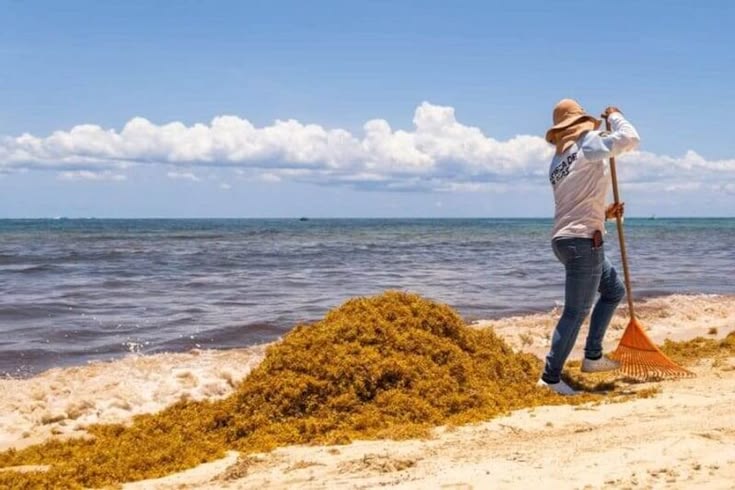
What Is Sargassum?
Sargassum is a naturally occurring brown seaweed that floats on the surface of the Atlantic Ocean. Unlike most seaweed, it does not attach to the ocean floor. Instead, it forms large floating mats that provide habitat for marine life.
Over the past decade, however, unusually large quantities of sargassum have accumulated in the Atlantic, creating what scientists call the "Great Atlantic Sargassum Belt." Ocean currents and seasonal winds carry these massive seaweed blooms toward the Caribbean, Gulf of Mexico, and parts of the southeastern United States.
Why Has Sargassum Become a Bigger Problem?
Researchers believe several factors contribute to the increase in sargassum:
-
Rising ocean temperatures
-
Changes in ocean currents
-
Increased nutrient runoff from agriculture and rivers
-
Climate-related environmental changes
While scientists continue to study the exact causes, most agree that large seasonal sargassum arrivals are likely to remain part of Caribbean coastal management for the foreseeable future.
When Is Sargassum Season?
Sargassum can appear at any time of year, but peak season typically occurs between:
-
March to November
-
Highest concentrations usually between May and August
The intensity varies significantly from year to year. Some years experience minimal impact, while others see substantial accumulations.
Weather conditions, wind direction, ocean currents, and beach orientation all influence how much seaweed reaches a particular coastline.
What Are the Disadvantages of Sargassum?
For Tourists
When large quantities wash ashore, sargassum can:
-
Affect the visual appeal of beaches
-
Create unpleasant odors as it decomposes
-
Reduce swimming enjoyment
-
Limit water activities in affected areas
It is important to note that many resorts actively remove sargassum daily, often before guests arrive at the beach each morning.
For Coastal Communities
Heavy accumulations may:
-
Increase beach maintenance costs
-
Require specialized cleanup equipment
-
Impact local tourism businesses
-
Affect certain marine ecosystems
For Real Estate Investors
Investors should understand that sargassum is primarily a beach-management issue rather than a property-value issue.
However, properties that depend heavily on beachfront tourism may experience:
-
Increased maintenance expenses
-
Seasonal fluctuations in guest satisfaction
-
Greater reliance on professional property management
The impact varies considerably depending on location and beach orientation.
How Do Resorts and Communities Manage Sargassum?
The Caribbean tourism industry has invested heavily in mitigation measures.
Common solutions include:
Offshore Barriers
Floating barriers are installed offshore to intercept sargassum before it reaches the beach.
Mechanical Collection
Specialized boats collect sargassum at sea before it reaches shore.
Daily Beach Cleaning
Many luxury resorts remove seaweed every morning using dedicated maintenance teams.
Alternative Beach Experiences
Beach clubs, pools, marinas, golf courses, and inland attractions help diversify the visitor experience beyond a single beachfront activity.
Which Caribbean Destinations Experience Less Sargassum?
No Caribbean destination is completely immune, but some areas generally experience less accumulation due to geography, currents, and coastline orientation.
Generally Lower-Risk Areas
-
Aruba
-
Curaçao
-
Bonaire
-
Barbados (west coast)
-
U.S. Virgin Islands (certain beaches)
-
Cayman Islands (some western beaches)
Local conditions can change, so no location is guaranteed to remain sargassum-free.
Sargassum in the Dominican Republic
The Dominican Republic has thousands of kilometers of coastline, and sargassum impact varies dramatically by region.
Areas More Frequently Affected
Punta Cana and Bávaro
The east-facing coastline is exposed to Atlantic currents, making it more likely to receive seasonal sargassum arrivals.
However:
-
Most major resorts maintain daily cleanup operations.
-
Beach quality often remains excellent outside peak events.
-
Tourism demand continues to grow despite seasonal sargassum challenges.
Areas Often Less Affected
Bayahibe and Dominicus
Located on the southeastern coast facing the Caribbean Sea rather than directly facing the Atlantic Ocean.
Advantages include:
-
Historically lower sargassum levels
-
Calmer waters
-
Better protection from Atlantic currents
This is one reason Bayahibe has become increasingly attractive for both vacationers and real estate investors.
La Romana
Generally experiences less sargassum than Punta Cana due to its geographic position.
Samaná
Conditions vary depending on beach orientation and seasonal currents.
Some beaches remain relatively protected, while others may occasionally receive significant accumulations.
Las Terrenas
Usually experiences moderate levels, though conditions vary considerably by beach and season.
Does Sargassum Affect Real Estate Investment Potential?
In most cases, no.
The Dominican Republic continues to attract millions of visitors annually and remains one of the fastest-growing tourism destinations in the Caribbean.
When evaluating an investment property, factors such as:
-
Location
-
Airport accessibility
-
Developer reputation
-
Rental demand
-
Property management quality
-
Infrastructure
-
Amenities
typically have a much greater influence on investment performance than seasonal sargassum.
For example, Punta Cana continues to see strong real estate development, hotel expansion, and international demand despite occasional sargassum events.
Investor Tips
Before purchasing Caribbean real estate:
-
Visit the area during different seasons.
-
Ask property managers about historical beach conditions.
-
Evaluate nearby amenities beyond the beach.
-
Consider destinations with diversified tourism infrastructure.
-
Focus on long-term demand drivers rather than short-term seasonal events.
Final Thoughts
Sargassum is a natural environmental phenomenon that has become a recurring challenge throughout much of the Caribbean. While it can temporarily affect beach conditions, modern management techniques and significant investment by resorts and local authorities have reduced its impact on tourism.
For investors, understanding local conditions is important, but sargassum should be viewed as one factor among many when evaluating a destination. In the Dominican Republic, areas such as Bayahibe and La Romana generally experience less sargassum than Punta Cana, while Punta Cana continues to benefit from world-class infrastructure, international air access, and strong rental demand.
Ultimately, successful Caribbean real estate investing depends far more on choosing the right property, location, and management strategy than on seasonal seaweed arrivals.
Copyright © Monika Texier 2026